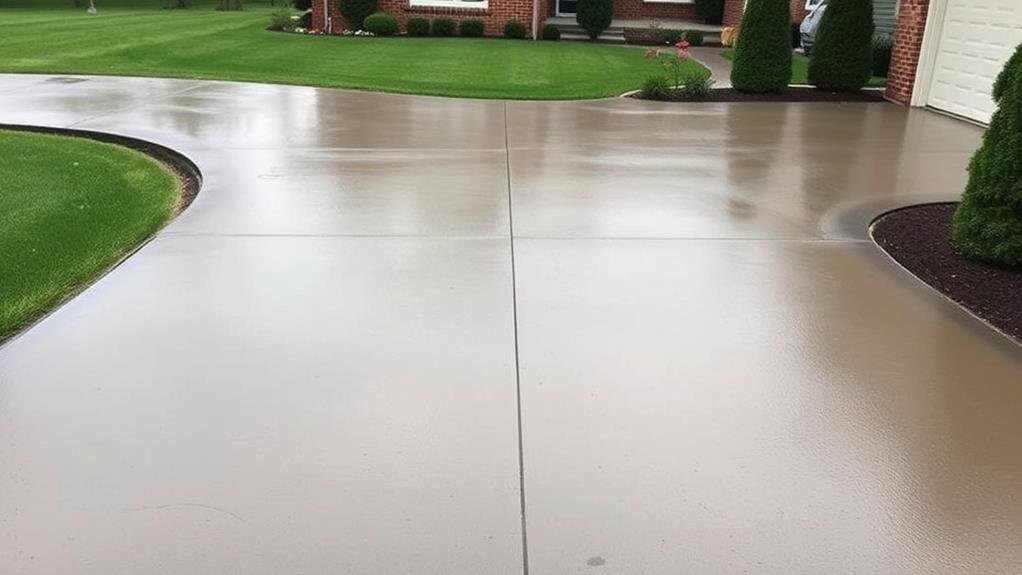
Sealer will not bond to dirty or wet concrete. We wash every slab with hot-water pressure equipment before we touch the sealer. This removes oil, mold, tire marks, and white mineral buildup. The concrete has to be clean and dry for the sealer to work.
Wet concrete is the number one reason sealers bubble and peel. We use moisture meters on every slab before we apply anything. If the reading is too high, we wait. We only seal when the concrete is ready.
The sealers sold at hardware stores are thin and short-lived. We use industrial-strength sealants rated to handle Ontario winters, UV rays, and heavy traffic. The products we use meet recognized testing standards for durability and water resistance.
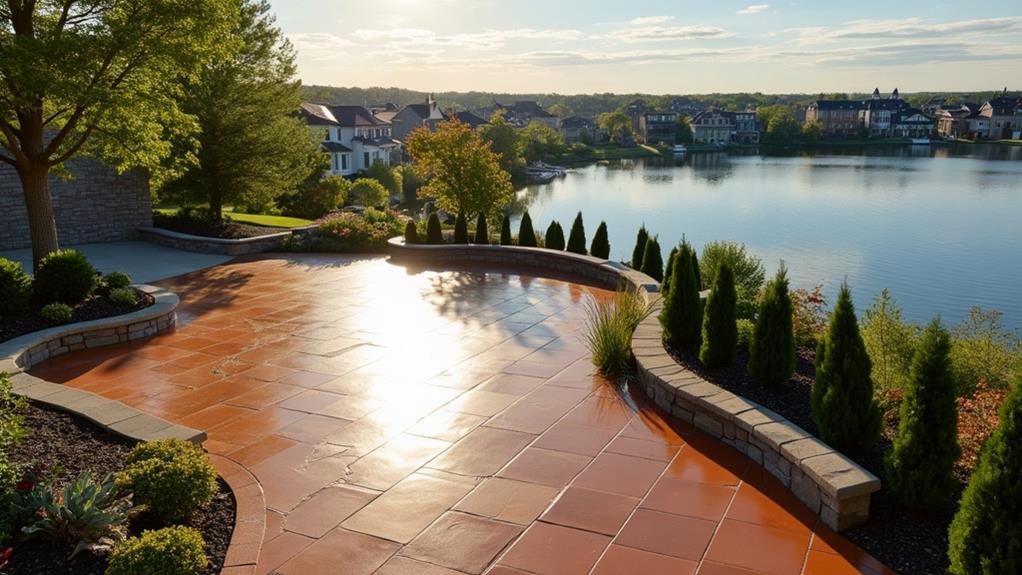
Glossy sealers on stamped concrete or pool decks can get slippery when wet. We mix a fine grit additive into our top coat. This keeps the surface safe to walk on in rain or after a freeze.
Every sealing job comes with a written warranty. If the sealer peels or fails due to our application, we come back and fix it at no cost.
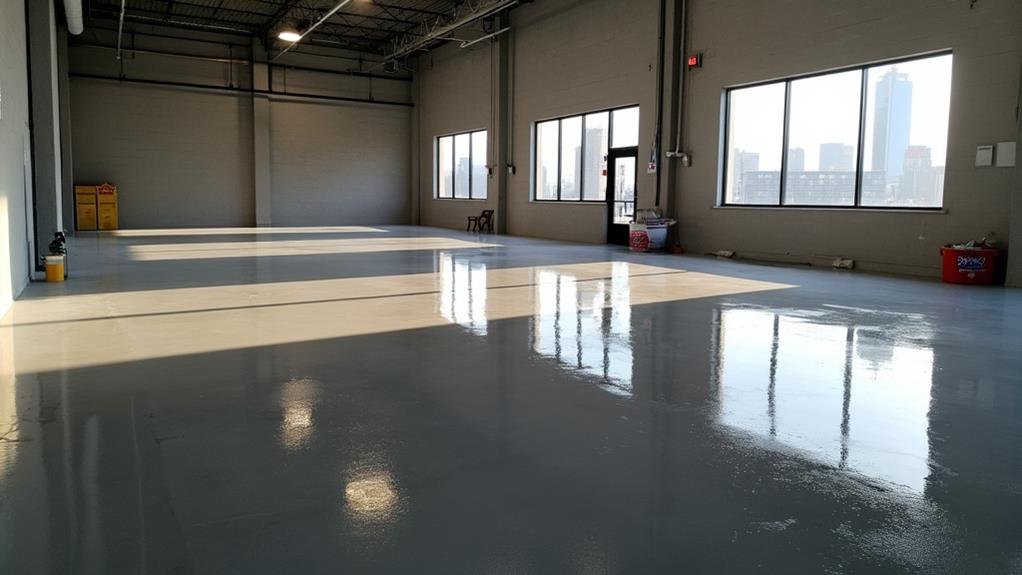
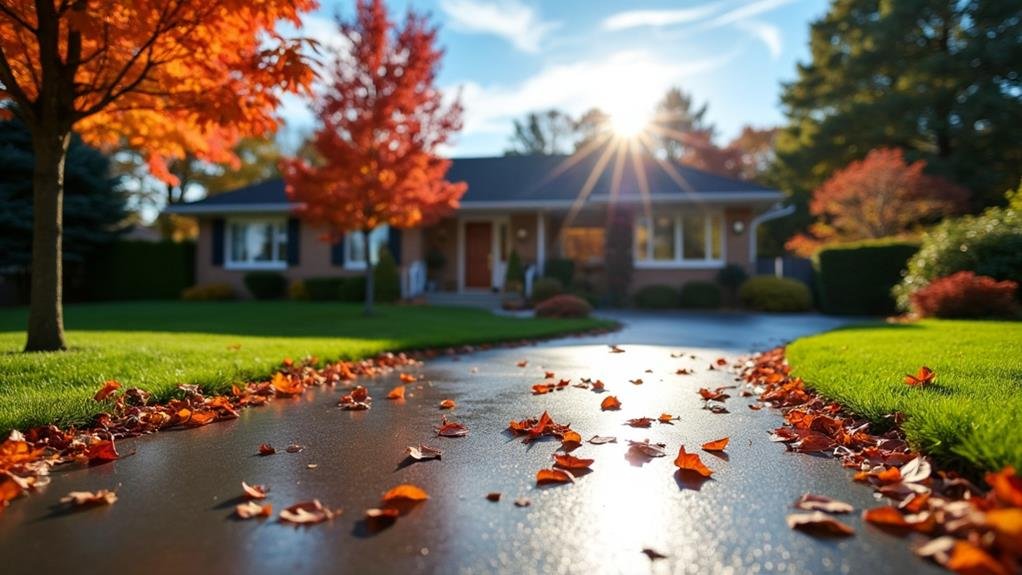
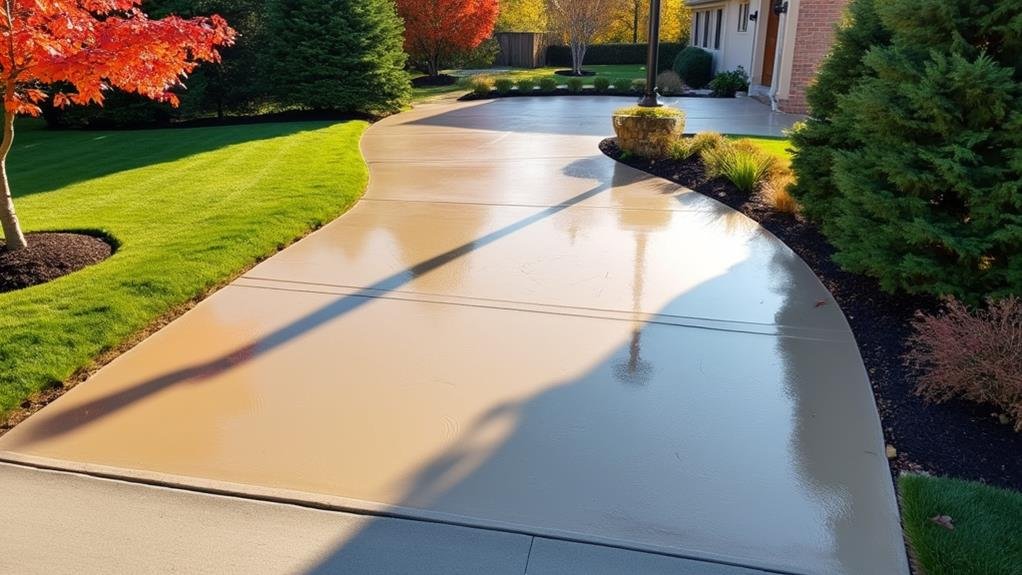
A lot of contractors show up, give you a price, and start work the same week. We take a few extra steps first because rushing into a job without understanding the problem is how you end up with the wrong fix.
We wash the concrete using commercial equipment running at 4,000 PSI and 200°F to strip oil, tire marks, mold, and white mineral crust.
On tight or smooth concrete, we apply a mild acid wash to open the pores, letting the sealer bond deeper and hold longer.
We route out cracks and old joint material, install foam backer rods, and fill gaps with polyurethane caulk to block water.
We read moisture levels using an electronic meter. We will not apply sealer until the reading drops below 4% to avoid early failure.
We apply two thin, even coats using the correct tools. For decorative flatwork, we mix in a traction-grip additive.
A penetrating silane-siloxane sealer on a driveway lasts about 5 to 7 years. A topical acrylic sealer on stamped concrete or aggregate needs to be redone every 2 to 3 years. The topical type wears faster because it sits on the surface instead of inside the concrete.
That is called blistering. It happens when the sealer gets applied to damp concrete or goes on too thick. Moisture tries to escape through the sealer and gets trapped. We can fix this by washing the surface with a solvent to re-dissolve the sealer or by stripping it off completely and starting fresh.
A penetrating sealer will not change how slippery the surface feels. A glossy acrylic sealer can get slick when wet. To fix that, we mix a grip additive directly into the top coat. This gives the surface enough texture to be safe without changing how it looks.
New concrete needs 28 days to fully cure. The water inside the slab needs to work its way out during that time. Sealing too early traps that moisture and causes the sealer to fail. If protection is needed right away, we can apply a curing compound that helps the concrete dry evenly while offering basic protection.
The surface and air temperature both need to be between 10°C and 30°C and stay that way for at least 24 hours. In Barrie, that means mid-May through October is the right window. Also, we check the weather before we book any job to make sure no rain is coming for at least 24 hours after we finish.
You can walk on it after 4 to 6 hours. Keep vehicles and heavy equipment off for at least 24 to 48 hours. The sealer needs that time to fully harden and bond to the surface.