Any concrete that touches or crosses city property needs a permit. We apply for it, track it, and schedule the work around the approval timeline.
Where a driveway crosses a sidewalk, the depth and slope must meet city standards. This also means the crossing must be safe for snowplows to pass over without damage.
Before we dig, we contact all local utility companies. Gas lines, water mains, and hydro cables get marked on-site. We don't break ground until every line is located.
Here is exactly what we do from the time we arrive to the time we leave.
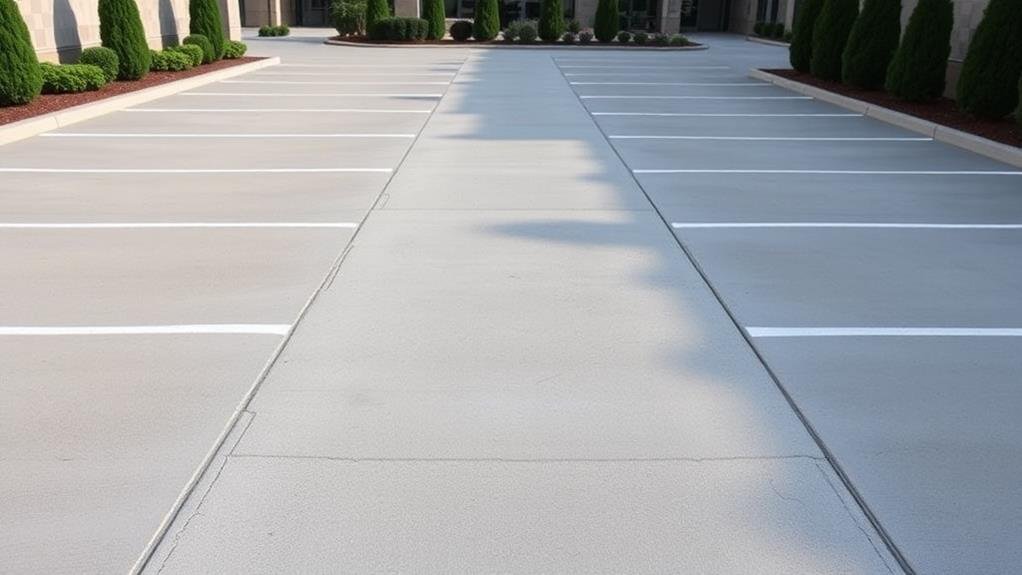

There’s no mystery to what we do. Here’s the full process, start to finish.
We measure the area, locate the slope direction, and call Ontario One Call to mark any underground lines before touching anything.
We remove the old surface and dig down to stable ground. The depth depends on your soil type and weight needs.
We spread gravel in layers and compact each one with a heavy plate compactor. A packed base is key for a long life.
Wood or steel forms shape the pour. Steel reinforcement goes inside on support chairs to sit in the middle.
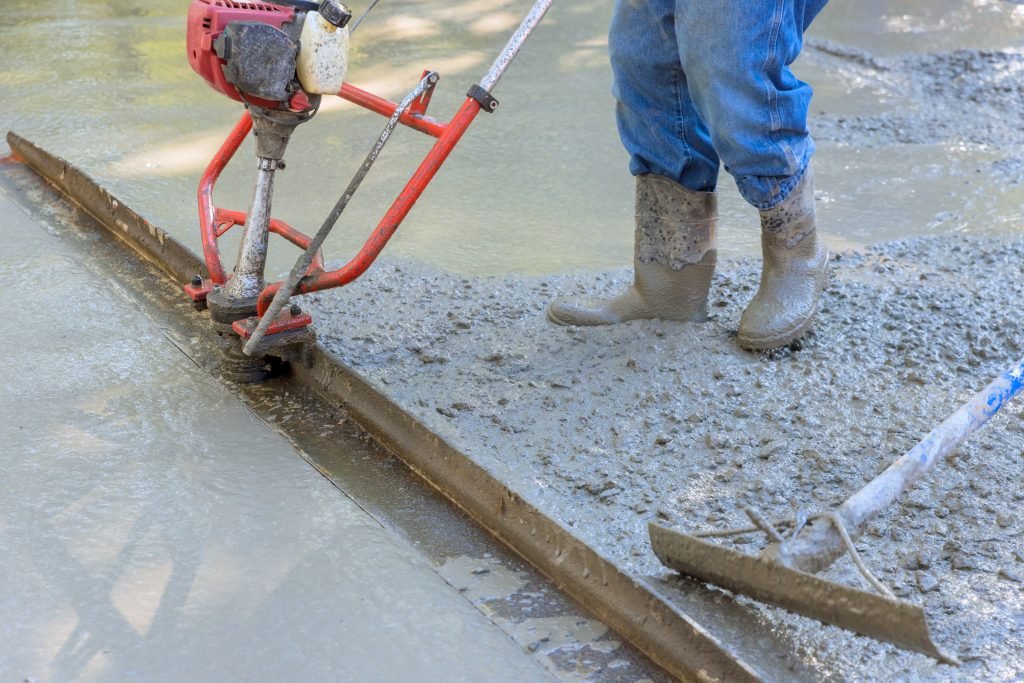
Concrete comes from the mixer truck. We spread it, level it, and apply your choice of a broom grip or stamped pattern.
Within 24 hours, we saw-cut relief lines every 10 feet. This guides winter shrinking cracks to happen neatly below the surface.
Once cured, we apply a siloxane sealer to block moisture and road salt, which can double the life of driveways in Ontario.
You can walk on it after one to two days. Wait at least seven to ten days before driving a car on it. If you have a heavy truck or RV, give it the full 28 days. Concrete keeps getting harder over time. At 28 days it's close to its full strength.
Regular concrete and air-entrained concrete look the same. The difference is inside. Air-entrained concrete has millions of tiny bubbles mixed in. In Barrie winters, moisture gets into small pores in the concrete. When it freezes, it expands. In regular concrete, that expansion has nowhere to go — so the surface chips and flakes. The bubbles in air-entrained concrete act as relief valves. The ice has room to expand without breaking anything.
It depends on where the new concrete goes. Work that stays entirely on your own property usually doesn't need a permit, though it still has to follow zoning rules. The moment it crosses onto city land — or touches the road curb — you need a Right-of-Way Permit from the City of Barrie. We check every job before it starts and pull the right permits.
Granular A is a mix of crushed stone and fine particles. When you compact it, those fines fill every gap and lock it tight. It's a solid, stable base for most driveways. Clear Stone is washed stone with no fines at all. It looks like gravel but drains very fast because water flows right through the gaps. For properties with clay soil or poor drainage — common in areas like Holly and Painswick — Clear Stone prevents ice from building up under the slab.