Your Basement Is Trying to Tell You Something

Barrie’s clay soil and brutal winters are hard on foundations. We fix that.

Water in the basement is not just annoying. It is a warning sign. Left alone, it ruins flooring, grows mould, and weakens the walls your home sits on. Most homeowners wait too long because they think it is just a small drip. But drips turn into cracks, and cracks turn into floods. At Barrie Concrete, we have seen what happens when water damage gets ignored. We also know exactly how to stop it. Our crew works on homes all over Barrie and Simcoe County. We look at where the water is coming from, not just where it shows up.

Why Barrie Homeowners Choose Us

Finding a contractor you can trust is hard. Many companies promise quick fixes that fail after the first heavy rain. Here is how we do things differently.

We Know Barrie's Ground

We do not use a one-size-fits-all approach. Barrie's clay soil and hard winter freezes require specific drainage. We know the local building codes and get the right City permits before we start.

We Use the Right Tools

We invest in specialized gear that keeps your home safe. We use air-digging tools to protect your underground utility lines. We also use wet saws to keep dust out of your living space. We also test every pump under a real load before we leave.

No Sales Pitches

We do not try to sell you systems you do not need. If a small crack injection will solve your leak, that is what we will recommend. You get straight talk, a fair price, and a dry basement.
What We Do About Basement Leaks

Not every basement needs the same fix. We look at your specific situation before recommending anything. Here are the four main approaches we use.

Digging Out the Problem at the Source

If water is saturating the soil around your foundation, the most direct fix is to deal with it before it gets close to the wall. We dig down to your footing level using a pneumatic soil air-lance excavator, a tool that uses pressurized air to move soil without disturbing buried utilities. That matters in older Barrie neighbourhoods where pipes run close to foundations.

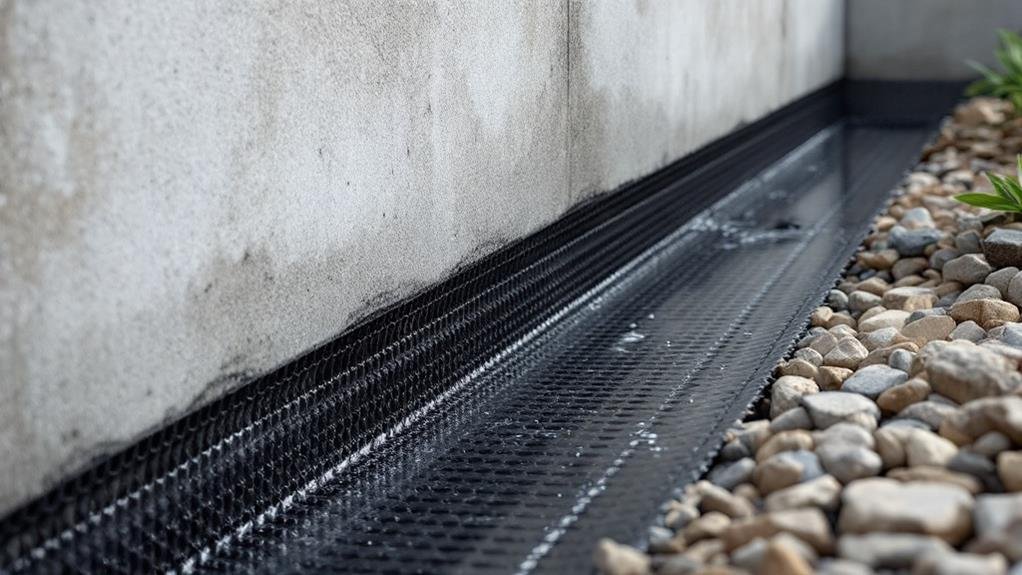
Once we are down there, we apply a Delta-MS dimple membrane directly to the outer face of the wall. This is a rigid, textured sheet that creates an air gap between the soil and the concrete so moisture runs down instead of soaking through. We also pull out your old clay weeping tile and replace it with filter-sock-wrapped perforated PVC pipe. Old clay tile collapses and clogs over time. PVC does not.

This work follows Ontario Building Code Division B Article 9.14.2.1 and Article 9.14.3.3, the Ontario standards for foundation drainage. We file under the City of Barrie’s APLI building permit process before any digging starts, so there are no surprises with inspections.
basement waterproofing protection layer

Fixing It From Inside When Digging Is Not an Option

Some homes in Barrie have decks, driveways, or old concrete patios right against the foundation. Digging there is not practical. In those cases, we go in through the floor.

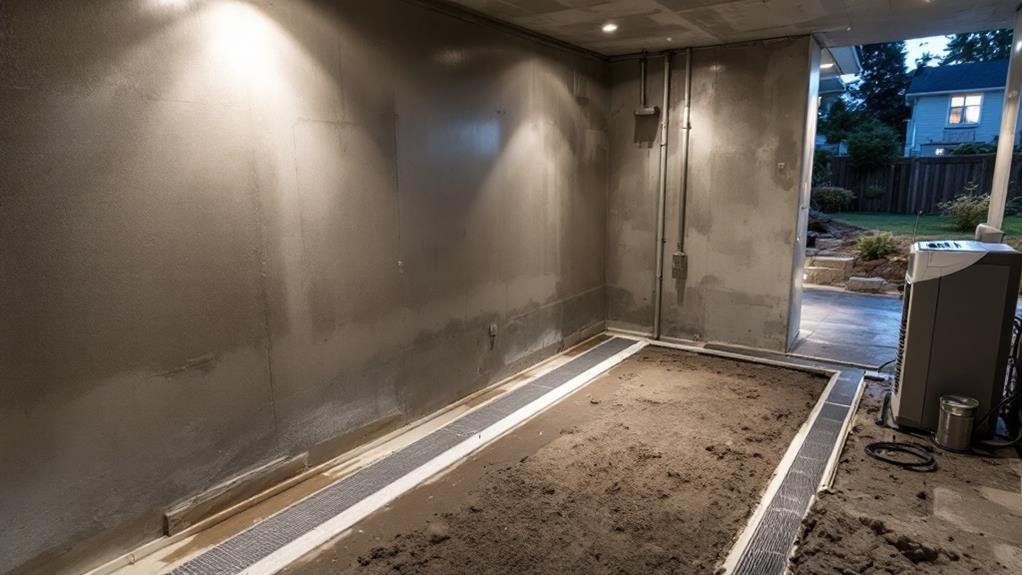
We cut a channel along the inside perimeter of the basement slab using a diamond-wheel wet concrete saw. This blade runs wet to keep dust down, and it cuts with very little vibration so the rest of your floor stays intact. Inside the channel, we lay a perforated PVC drainage conduit on a bed of clean stone. Water that seeps through the wall travels down and into that pipe, then heads to the sump pit instead of pooling on your floor. We patch the top of the channel with fresh concrete.

This install follows OBC Division B Subsection 9.13.3, which sets the standards for waterproofing membrane performance in residential below-grade applications.
moisture prevention for basements

Giving Collected Water a Way Out

A drain that has nowhere to send the water is just a wet trench. That is where the sump pump comes in. We install cast-iron submersible sump pumps, not the plastic ones you see at hardware stores. Cast iron handles the heat from continuous cycling without warping or cracking.

After installation, we run it through a submersible pump flow-rate flowmeter to measure exactly how many gallons per minute it moves under load. We do this to confirm the pump can handle your specific pit volume during a worst-case storm, not just in normal conditions.

The pit itself is built to the minimum specs in OBC Division B Article 9.14.5.2, which requires at least 750 mm of depth and 0.25 m² of floor area. Discharge connects to Barrie’s storm drain system only, not the sanitary line. That is a requirement under the City of Barrie’s “Disconnect to Protect” stormwater separation program, and it matters for your insurance coverage too.
basement waterproofing and sealing

Sealing Cracks So They Stop Growing

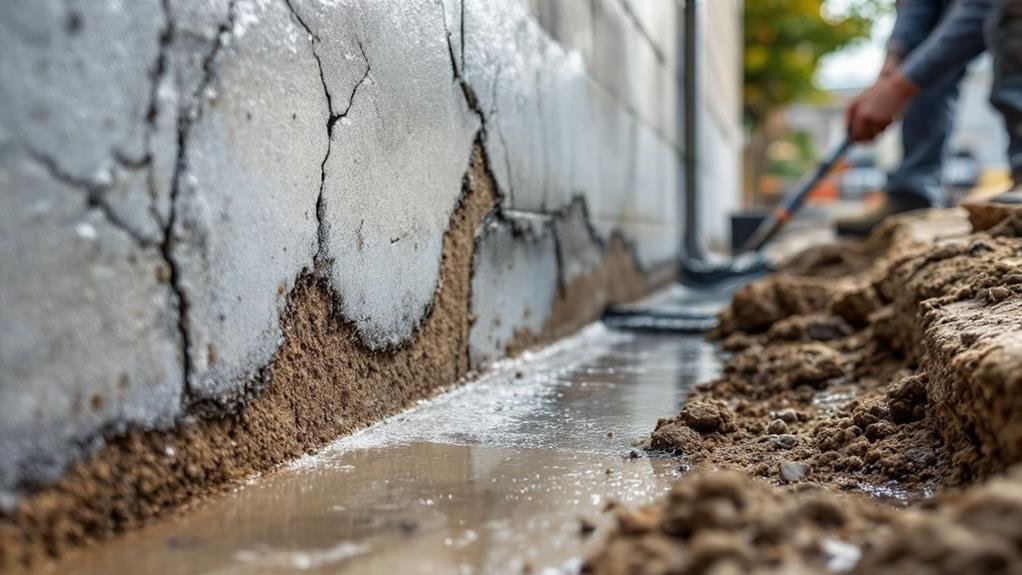
A crack in your foundation wall is not going to heal on its own. Every winter makes it wider. At some point, water comes through in a steady stream instead of a slow seep.

We seal cracks from inside your basement without digging. We drill ports along the length of the crack and connect them to a high-pressure packer injection pump. That pump pushes a low-viscosity polyurethane injection resin into the crack under pressure. The resin travels through the full depth of the wall and expands as it cures, filling every void from front to back. It stays flexible after curing, so minor ground movement will not reopen the seal.

For structural cracks that have shifted or displaced, we use epoxy instead. Epoxy bonds concrete sections back together and cures harder than the original concrete. Where walls have started to bow inward under soil pressure, we install carbon fibre straps to lock them in place.

All crack repairs meet OBC Division B Subsection 9.15.4 for foundation wall stabilization and are carried out to ASTM C881 specifications for structural concrete bonding systems.
leak repair for foundations

What Happens When You Call Us

A lot of contractors show up, give you a price, and start work the same week. We take a few extra steps first because rushing into a job without understanding the problem is how you end up with the wrong fix.

Step 1 - We Look Before We Guess

We inspect the foundation walls, check the slope of the ground around the house, and measure humidity levels inside the basement. This tells us where the water is coming in and why.

Step 2 - We Prep the Space

Before any cutting or digging starts, we cover floors, seal doorways, and run air scrubbers. Your basement will be dusty. Our job is to keep that dust from spreading.

Step 3 - We Do the Work

Exterior jobs involve digging, membrane application, and drainage pipe installation. Interior jobs involve cutting, drainage, and concrete patching. Done to Ontario Building Code.

Step 4 - We Test Before We Leave

We do not assume the system works. We run water through it, check pump cycle times, and test backup operation. If something does not perform correctly, we fix it.

Step 5 - We Clean Up & Restore

Exterior excavations are backfilled, graded away from the house, and left looking clean. Interior trenches are patched with fresh concrete. No mess is left behind.

Where We Work

Our Service Area

Barrie Concrete LTD proudly provides professional, licensed concrete solutions across Simcoe County and surrounding areas. Our local crews are familiar with regional soil types, permitting regulations, and winterizing requirements to ensure your concrete installations stand the test of time.

Straight Answers to Common Questions

Yes. Spring flooding is not a fluke, it is the freeze-thaw and snowmelt cycle doing exactly what we described above. It will happen every year, and it will get worse as the cracks grow. The water is also introducing moisture to your walls and framing during the months when mould grows fastest.

Damp-proofing is a spray-on coating that builders apply to new foundations. It is cheap, fast, and only handles light soil moisture. It is not rated for hydrostatic pressure or standing water. Waterproofing means drainage, membranes, and weeping tile. If your home is more than 10 years old, the damp-proofing has likely already broken down.

Most of the time, yes. Poured concrete cracks can be sealed from inside using the injection method described above. We only recommend excavation when the crack is structural, the exterior membrane has failed, or the weeping tile is the root cause.

A single crack repair takes two to four hours. An interior drainage system with a sump pit takes two to three days. A full exterior job with excavation, membrane, and weeping tile runs three to seven days depending on how much of the perimeter we are working on.

Standard home insurance in Ontario does not cover gradual water seepage or ground flooding. You would need sewer backup coverage or an overland water rider. Most claims from chronic basement moisture get denied. The waterproofing job is an out-of-pocket cost, but it is far less than what the damage will cost if the problem keeps going.

Save Your Basement Before the Next Wet Season

Water damage never gets cheaper to fix. The longer you wait, the more pressure the soil puts on your walls. Mould also grows fast in damp air. A dry home starts with knowing exactly what is wrong. We will inspect your foundation for free. Then we will give you a clear plan to stop the leaks. You get honest answers from a local team with no pressure and no hidden fees.

Call Barrie Concrete at Call: (705) 999-7950 to book your free inspection today.